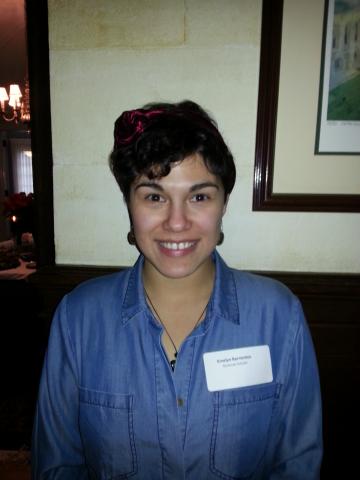
Emelyn Barrientos
Alumnae Scholarship Recipient, 2014
In this photo Emelyn is a junior, majoring in radio/TV/film, with a minor in World Literature.
The Alumnae Scholarship is a three year award, which is funded by an endowment, and goes to a freshman woman.
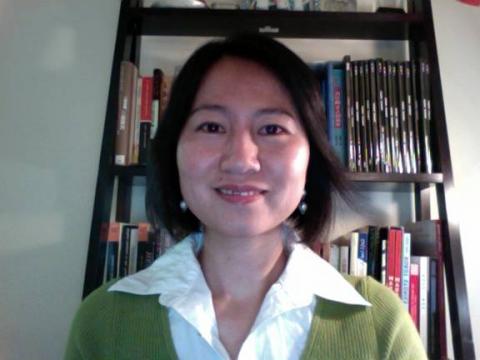
Li Zeng
Dissertation Fellowship Recipient, 2006
Li Zeng
Alumnae Dissertation Fellow, 2006
Li Zeng is a film and television scholar. She is an Associate Professor of Cinema Studies, Head of Theatre Studies, in the School of Theatre and Dance at Illinois State University. She completed her Ph.D. in Radio/Television/Film at Northwestern University in 2008. Her dissertation, “The Past Revisited: Popular Memory of the Cultural Revolution in Contemporary China,” won both a graduate research grant and the Alumnae Fellowship from Northwestern University. She has published reviews and articles on Chinese television and contemporary Chinese cinema in Jump Cut, Visual Anthropology, Critical Arts, and the Journal of American-East Asian Relations. Her research interests include film history, film genres, East Asian cinema, feminist theory, cultural memory, and gender studies.
Reflection on the Alumnae Fellowship
When I received a Dissertation Fellowship in 2006, I was in the fourth year of my doctoral study in the Department of Radio/Television/Film. I was at the crucial stage of writing and researching my thesis project, “The Past Revisited: Popular Memory of the Cultural Revolution in Contemporary China,” which explores the representation and (re)imagining of the Cultural Revolution in Chinese popular media. Due to the sensitivity of the subject, I had to explore many channels in China to obtain access to archives and to conduct interviews. This fellowship affirmed the value of the project, and made it possible for me to stay in China for an extended period of time to do research. I successfully completed the dissertation in 2008. Two articles were developed from the dissertation and were published in peer-reviewed journals. I have continued to research and write in the field of cultural memory and historical representation in visual media.
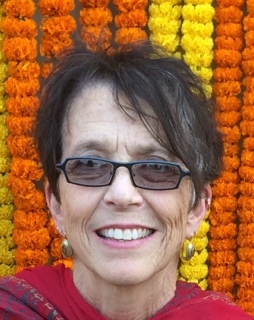
Deborah Puntenney
Dissertation Fellowship Recipient, 1995
Deborah Puntenney
Alumnae Dissertation Fellow, 1995
Deborah Puntenney, Ph.D. holds the position of Research Associate Professor in the School of Education and Social Policy at Northwestern University. She works in the area of community development and teaches courses in social policy, philanthropy, gender, and the family. She is a member of the adjunct faculty at the University of Chicago’s School of Social Service Administration, where she teaches U.S. social welfare policy. Deborah also operates a consulting firm specializing in the areas of community research and evaluation, social justice strategies for philanthropic and nonprofit organizations, and asset-based community development.
For the last 20 years, Deborah has been associated with the Asset-Based Community Development Institute (ABCD) and has served as Research Associate, Director of Research and Publications, and Associate Director during her tenure. She has been a member of the ABCD faculty since its inception, and has worked directly with other members on numerous community projects, as well as authoring many of the institute’s community workbooks. All of Deborah’s direct community work emphasizes the design and implementation of asset-oriented strategies toward social justice goals. Beyond her work with the ABCD Institute, her research and writing emphasize themes related to community, gender, and social policy. Recent publications include:
Puntenney, D. (2013). Asset-Mapping. In D. Coghlan & M. Brydon-Miller (Eds.), Encyclopedia of Action Research. Forthcoming from Sage Publications, London.
Puntenney, D., & Zappia, B. (2013). Place-Based Strategies for Addressing Health Disparities. In K. Fitzpatrick (Ed.), Poverty and Health in America. Forthcoming from ABC-CLIO/Greenwood Press, Santa Barbara, CA. Grimm, K., Walker, J., & Puntenney, D. (2013). Improving Health/Reducing Inequity: Asset-Based Community Development. In K. Fitzpatrick (Ed.), Poverty and Health in America. Forthcoming from ABC-CLIO/Greenwood Press, Santa Barbara, CA.
Kretzmann, J., & Puntenney, D. (2010). Neighborhood Approaches to Asset Mobilization: Building Chicago’s West Side. In A. Goetting and G. P. Green (Eds.), Mobilizing Communities: Asset Building as a Community Development Strategy, pp. 112-29. Philadelphia: Temple University Press.
Dr. Puntenney’s current work falls into three categories. First, she has an ongoing research grant focused on four communities in western NY, where she provides technical support to community groups implementing an ABCD approach to building healthier neighborhoods. For this project she also works directly with the funder—the Greater Rochester Health Foundation—to develop a logic model and tools for engaging residents as the co-producers of health. She is also working with the Community Health Worker Network of Buffalo, New York to develop boundary spanning practices and curricula for health worker training that incorporates community building and community-based participatory research components. Finally, Dr, Puntenney is consulting with the Robert Wood Johnson Foundation on developing their new institutional approach
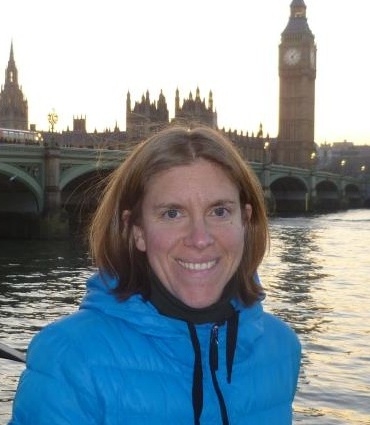
Elizabeth Prevost
Dissertation Fellowship Recipient, 2003
Elizabeth Prevost
Alumnae Dissertation Fellow, 2003
I am a historian specializing in modern Britain & the British Empire, sub-Saharan Africa, women & gender, and global Christianity. I earned my B.A. at Trinity College in 1996 and my PhD at Northwestern in 2006. Since 2004 I have been a member of the faculty at Grinnell College, IA, and I am currently beginning my third year as chair of the History Department. I also serve on the Executive Committee of the North American Conference of British Studies. When I am not writing, researching, and teaching, I enjoy choral singing, travel, good food, and summers by the sea. My spouse is a fellow historian and we have a 4-year old daughter.
Impact of the Alumnae Dissertation Fellowship
In 2010 I published my dissertation as a monograph, The Communion of Women: Missions and Gender in Colonial Africa and the British Metropole, with Oxford University Press, and it has been reviewed favorably in a number of journals and periodicals. The support of the Alumnae Dissertation Fellowship was absolutely critical to the completion of the dissertation and then book, and I will always be immensely grateful to The Alumnae of Northwestern for that opportunity. My graduate school years at NU were deeply formative to my personal and intellectual journey, and this month (May 2015), I will gather with a group of former History graduate students back in Harris Hall to honor the retirement of Alex Owen, an indefatigable adviser and mentor who taught us what it means to be a women's and gender historian. It's quite astonishing to consider the many strong and talented women whose company I share as an Alumnae Fellow, and I will continue to endeavor to make my career a worthy testimony to that legacy.
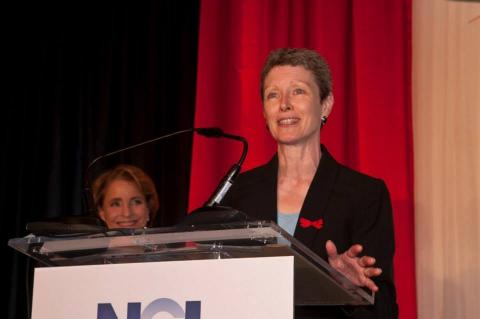
Robyn Muncy
Dissertation Fellowship Recipient, 1986
Robyn Muncy
Alumnae Dissertation Fellow, 1986
Robyn Muncy is Associate Professor of History at the University of Maryland, College Park, where she teaches and researches twentieth-century U.S. history.
Professor Muncy's scholarship has focused especially on women’s history, social policy and progressive reform movements. Her first book, Creating a Female Dominion in American Reform, 1890-1935 analyzed the role of middle-class women in creating the U.S. welfare state. Her second book, Engendering America, co-authored with Sonya Michel, was a documentary history of gender in the U.S. since 1865. Her most recent book, Relentless Reformer: Josephine Roche and Progressivism in Twentieth-Century America, is a political biography of activist Josephine Roche, and it analyzes America’s progressive reform tradition from the Progressive Era through the Great Society.
Professor Muncy has received several fellowships and awards. In 2007-08, for instance, she was a fellow at the Woodrow Wilson International Center for Scholars in Washington, DC, and she returned to the Center as a public policy scholar in the summer of 2009. In 2004 and 2005, she was featured in Who's Who Among America's Teachers.
Professor Muncy has made several appearances on broadcast media. She was a talking head for an episode of The Sixties, a 10-hour documentary broadcast on CNN in 2014. She appeared in Fire at the Triangle, a PBS documentary on the Triangle Shirtwaist Fire, which premiered on The American Experience in 2011. She was interviewed in The First Measured Century, another PBS documentary that first aired in 2000. In 2013, C-SPAN broadcast one of her classroom lectures, “American Women Did Not Go Home After World War II: Women’s Labor Force Participation, 1945-2000,” and in January 2015, one of her book talks on Relentless Reformer. Both C-SPAN lectures are available on the web.
Impact of the Alumnae Dissertation Fellowship
I am delighted to let you know that the Northwestern Alumnae Dissertation Fellowship that I received in 1986-87 enabled me to complete my dissertation, earn my Ph.D., and land my first academic position.
The dissertation you helped me complete provided the foundation of my first book, published in 1991 by Oxford University Press and titled Creating a Female Dominion in American Reform, 1890-1935. On the basis of the manuscript for that book, I got a new job in 1990, this one at the University of Maryland, College Park where I was tenured in 1993.
I have, ever since, been teaching and researching U.S. women’s history and especially the role of women in devising social policies and leading social movements in the twentieth-century United States. In that process, the lives of many young women have been changed and historians’ understanding of our shared past has been expanded to include the contributions of women.
Thank you so very much for setting me on this incredibly rewarding path.
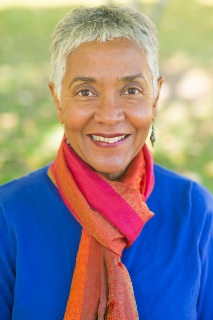
D. Soyini Madison
Dissertation Fellowship Recipient, 1987
D. Soyini Madison
Alumnae Dissertation Fellow, 1987
D. Soyini Madison focuses on the intersections of labor activism, political economy of human rights, and indigenous performance tactics. Her book, Acts of Activism: Human Rights and Radical Performance (Cambridge), is based on how local activists in Ghana, West Africa, employ modes of performance, as tactical interventions, in their day-to-day struggles for women’s rights, water democracy, and economic justice. Madison adapts and directs her ethnographic data for the public stage. Her most recent production, Labor Rites, is a mosaic of the USA labor movement and how human labor is variously enacted, valued, and contested. Madison’s other staged work includes: I Have My Story to Tell, an oral history performance of University of North Carolina laborers and service workers; Mandela, the Land, and the People, based on the life and work of Nelson Mandela; Is It a Human Being or A Girl? a performance ethnography on traditional religion, modernity, and gendered poverty in West Africa; and, Water Rites, a multi-media performance on the privatization of public water and the struggle for clean and accessible water as a human right in the Global South. Madison is the author of five books: The Woman That I Am (St. Martin’s P.); Critical Ethnography: Method, Ethics, and Performance (Sage Pub.); The Performance Studies Handbook, Co-Edited with Judith Hamera (Sage Pub.) Acts of Activism (Cambridge Univ.P.) Madison’s most recent book, African Dress: Fashion, Agency, and Performance, co-edited with Karen Tranberg Hansen represents meditations on the meanings of the dressed body in specific sites throughout Africa and the Black Diaspora (Berg Pub.). Professor Madison is the recipient of many awards including the National Communication Association Lila A. Heston Award for Outstanding Scholarship in Interpretation and Performance as well as the Leslie Irene Coger Award for Distinguished Performance.
Reflection on the Alumnae Fellowship:
Receiving the Dissertation Fellowship, during my PhD studies, was a gift of confidence and inspiration at a very difficult time of family loss and challenging motherly responsibilities. The Fellowship came when I needed to be reminded that my time, energy, concentration and scholarly work were appreciated and honored. The Fellowship was further evidence that I had chosen a University with a legacy that genuinely values its students with generous support as they envision their futures. To know the Dissertation Fellowship was given on behalf of the Alumnae made it even more significant, because it is a testament to the commitment and continuity of those who, after leaving the university, still cherish Northwestern as meaningful and significant to their lives and to the successes they have achieved. I am now a tenured professor in the department where I was once a graduate student. Receiving the Dissertation Fellowship is a memory I hold dear as motivation on my path toward completing my degree and joining the esteemed ranks of Northwestern alumnae.
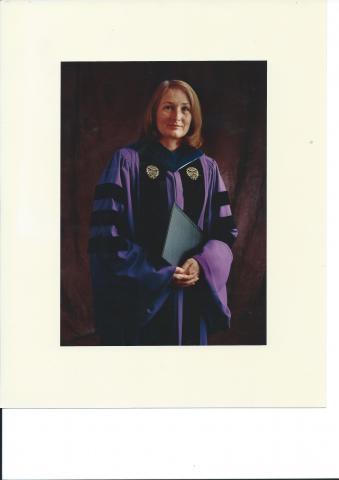
Louise Love
Dissertation Fellowship Recipient, 1981
Louise Love
Alumnae Dissertation Fellow, 1981
Louise Love retired from a 30-year career in higher education administration in July of 2014. With the help of a dissertation year fellowship from The Alumnae of Northwestern, she earned a Ph.D. in English with a specialty in English Renaissance drama in 1984. Her dissertation, The Saint’s Play in England during the Protestant Transition, explored the ways in which the popular genre of saint’s play survived in England after the genre was outlawed under Tudor monarchs.
Having spent 17 years as a part-time student to earn her bachelor’s and master’s degrees, Louise enthusiastically accepted a position with Northwestern’s Division of Continuing Education (now School of Continuing Studies) after receiving her doctorate. She worked there with returning adult students for 16 years, ending as vice dean. In 2000, she joined Roosevelt University as associate provost and served there for six years. In 2006, Louise went to Columbia College Chicago as deputy provost. In 2007, she was made vice president for academic affairs. She continued in that role until retirement and also took on the role of interim provost for the last three years.
In 1998, Louise attended Harvard’s summer MLE Institute to study the management of lifelong education; and in 2000, she undertook training in mediation through the Center for Conflict Resolution in Chicago. In 1990, she and other members of her administrative team received a Team Leadership Award from the American Association of University Administrators. In 2003, she received an Alumni Merit Award from the Northwestern Alumni Association.
Reflection on the Alumnae Fellowship:
Looking back on a most gratifying career in higher education administration, Louise is profoundly grateful to the dedicated women of The Alumnae of Northwestern University, and especially Helen Foster, for providing opportunities for women to pursue their scholarly interests and complete the degrees that open doors to fulfilling professional lives.
Note: Louise Love passed away November 6, 2021.
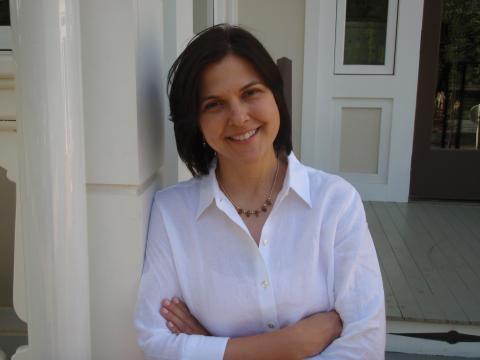
Kathryn Lavelle
Dissertation Fellowship Recipient, 1994
Kathryn Lavelle
Alumnae Dissertation Fellow, 1994
Kathryn Lavelle is currently the Ellen and Dixon Long professor of World Affairs at Case Western Reserve University in Cleveland, Ohio. Her research explores the exchange between economic and political institutions with a particular emphasis on global financial issues.
Dr. Lavelle’s first book, The Politics of Equity Finance in Emerging Markets, explored the political circumstances that surround large issues of stock in the developing world. After being granted tenure at Case Western, she was awarded an American Political Science Association Congressional Fellowship and named the William A. Steiger fellow, a designation given to the most promising political scientist in her class of fellows. While in Washington during 2006-2007, she worked on the staff of the House Committee on Financial Services on issues related to domestic and international monetary policy. She later drafted the manuscript for a book, Legislating International Organization: the US Congress, the IMF, and the World Bank, during the 2008-9 academic year while a resident fellow at the Woodrow Wilson International Center for Scholars. The next year, she was the inaugural holder of a Fulbright Visiting Chair in Global Issues at the University of Toronto Munk Centre where she began work on her most recent book, Money, Banks and the American Political System. In addition to her books, she is the author of numerous articles and book chapters appearing in International Studies Quarterly, Perspectives on Politics, International Organization, Review of International Organizations, The Journal of Modern African Studies, Third World Quarterly, Review of International Political Economy, International Journal of Political Economy, International Studies Review, Journal of International Affairs and The Columbia Journal of World Business.
Dr. Lavelle holds a PhD in political science from Northwestern University; an M.A. in government and foreign affairs from the University of Virginia and a bachelors degree in international economics from Georgetown University. She is a permanent member of the New York Council on Foreign Relations and a Global Fellow in the Global Europe program at the Woodrow Wilson International Center for Scholars.
Reflection on the Alumnae Fellowship:
The Alumnae Fellowship I received in 2004-5 was arguably the most transformative award of my career, because without it—none of the other work would have been possible. It allowed me to finish my dissertation against tough obstacles. When I was at Northwestern, I wanted to conduct innovative research that would combine my prior knowledge of diplomacy and international organizations with African development. The specific project explored the role of African States in the United Nations Conference on Trade and Development (UNCTAD), which meant I wanted to travel to the UNCTAD secretariat to interview African representatives. Programs that funded African research did not want to pay for me to go to Geneva, and programs that funded research in Switzerland did not want to pay for me to study African representation there. Therefore, the Alumnae funding meant that I was able to pursue a project that did not fit the existing categories.
The summer after I returned from doing the research, a member of the Alumnae—Marge Roche—graciously allowed me to housesit so that I could write up the dissertation. I published the major findings in the Journal of Modern African Studies, which is the journal of record in African Studies.
In the course of my career since then, I have published three books, been promoted to full professor with
an endowed chair at a major research university, and received awards from the West Africa Research
Association, Woodrow Wilson International Center for Scholars, American Political Science.
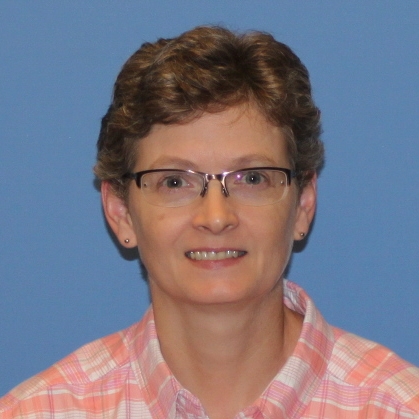
Amy E. Jetton
Dissertation Fellowship Recipient, 1990
Amy E. Jetton
Alumnae Dissertation Fellow, 1990
I grew up on a farm in rural northwestern Tennessee. My father farmed and was a rural mail carrier while my mother was the high school librarian. I was the youngest of four children born within six years. My parents helped put us all through college, but it was good that I was able to earn academic scholarships. I earned my BS in 1983 and spent 15 months in Australia on an ITT International Fellowship before applying to Northwestern. I began my doctoral studies in Neurobiology and Physiology in fall 1985. During my graduate work, I was supported by a Northwestern University Fellowship, NSF Graduate Fellowship, Northwestern University Teaching Fellowship and finally the Northwestern University Alumnae Dissertation Fellowship. After graduation in spring of 1991 with PhD in Neurobiology & Physiology, I began post-doctoral training and work at University of Massachusetts, Amherst and was awarded a National Research Service Award from NIH. In 1994, I began working for Middle Tennessee State University as an assistant professor in the biology department teaching physiology, endocrinology and human anatomy and physiology. In 1999, I earned tenure and promotion to the rank of associate professor. During my career I have coauthored 18 papers in national and international publications, advised 7 students to completion of their MS degrees and advised hundreds of students through their undergraduate degrees and application to medical, pharmacy, dental or graduate schools while teaching thousands of undergraduates in biology, nursing and pre-professional programs.
Impact of the Alumnae Fellowship
When I began my doctorate at Northwestern, one of my goals was to eventually become a biology professor. I hoped to return to Tennessee and work in public education to help smart, hard-working young people, just as professors had helped me as an undergraduate. The dissertation fellowship allowed me to continue to work on completing the final steps of my dissertation research as well as writing my dissertation and papers that arose from my research. It freed me from the need to teach or work on top of my studies, as I had done the previous year. The precious time afforded me opened several opportunities. I applied for and interviewed for several postdoctoral positions and jobs resulting in offers. I was also able to be part of additional research projects in my advisor’s lab that led to additional publications. These papers were key to building a curriculum vitae that helped me obtain a university position three years later in 1994. Many of my colleagues had difficulty finding tenure-track positions after their post-doctoral work. There is no doubt that the Dissertation Fellowship was a critical factor in helping my achieve my goal enabling me to teach and advise thousands of young people over the years as they completed degrees and moved on to careers or professional and graduate schools
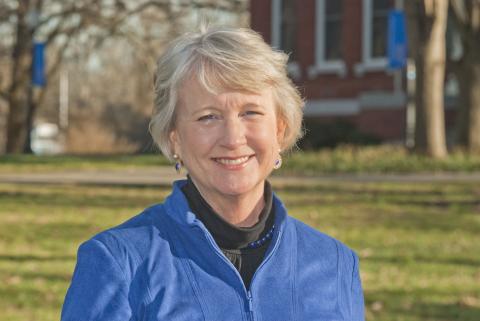
Anita Olson Gustafson
Dissertation Fellowship Recipient, 1988
Anita Olson Gustafson
Alumnae Dissertation Fellow, 1988
Dr. Anita O. Gustafson is Professor of History at Presbyterian College, Clinton, South Carolina, where she has taught since 1997. In her words, “my research field is American immigration history, particularly the movement of people from Sweden to America, but I have also developed interests in a number of other areas in American history. I teach American Colonial and Revolutionary History, History of the South, Women in American History, Young America, Immigration History, Slavery and Freedom in America, American history survey courses, as well as the Rise of World Cultures and Ideas and the Modern World, which are PC’s general education courses. I have also led, with other faculty colleagues, travel courses to Oxford University and to the American West of Lewis and Clark.
I received my B.A. in Swedish and economics with a minor in history at North Park University in Chicago, Illinois. It was at North Park that I came to understand the value of an education received at a small liberal arts college. I earned my M.A. and my Ph.D. from Northwestern University. Shortly after completing my doctorate, my husband, Charlie, and I moved to South Carolina where a few years later our son Karl was born. We now enjoy living near the Presbyterian College campus and feel very much at home in South Carolina. In 2007 I was named Presbyterian College’s Professor of the Year and receive an Excellence in Teaching Award from the South Carolina Independent Colleges and Universities.
Despite living in a part of the country where few Swedes settled, I have continued my research in Swedish immigration history. I have published a number of articles, including: ‘We Hope to be Able to Do Some Good: Swedish American Women’s Organizations in Chicago,’ for which I received the Franklin Scott prize for best new article appearing in the Swedish-American Historical Quarterly. Others I have published are: ‘Jenny Lind on Tour: The Swedish Nightingale’s Visit to Charleston, 1850-1851,’ ‘North Park: Building a Swedish Community in Chicago,’ and ‘Teaching Swedish in the Public Schools: Cultural Persistence in Minneapolis.’ I hope to have my manuscript, ‘Making Chicago Swedish: The Shaping of an immigrant Community in Chicago, 1880-1920,’ published soon.
Reflection on the Alumnae Fellowship
I am proud to be an alumna of Northwestern University and to be counted among the many talented women who have benefited from the Dissertation Fellowship. This award from the Alumnae of Northwestern University allowed me to complete my Ph.D. in history in a timely fashion by supporting me as I completed my dissertation research. My graduate experience at Northwestern prepared me well for my career as a professor and as a college administrator. You might say that I’ve paid back my Dissertation Fellowship by paying it forward—mentoring young women and men so that they can make the most of their education and serve as role models for those who follow after them.